
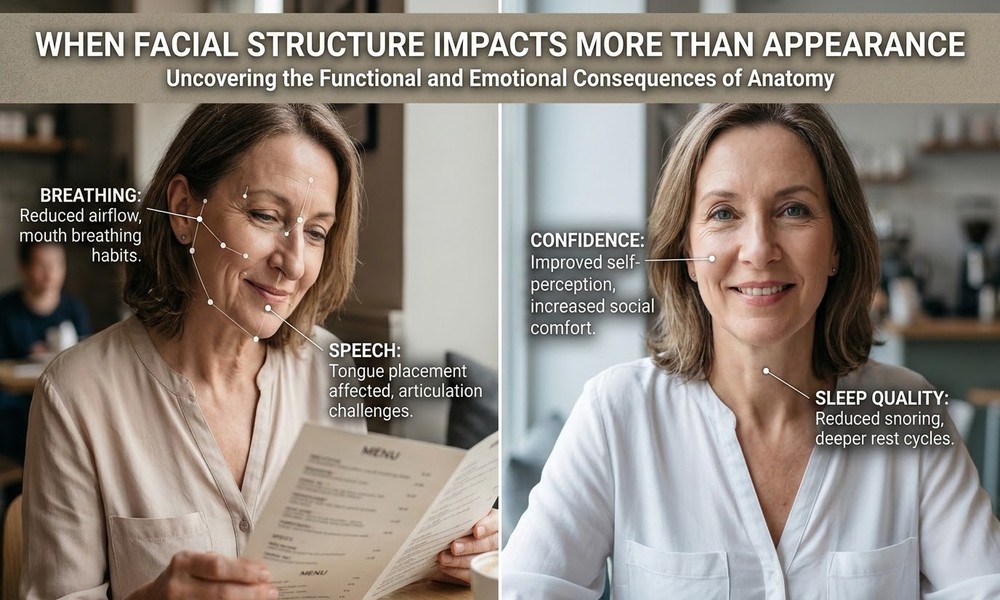
Facial structure is often talked about in terms of appearance, symmetry, or aging. But the face does much more than shape how someone looks. The bones, soft tissues, nasal passages, jaw position, and airway spaces all play a role in everyday health. They affect how a person breathes, sleeps, chews, speaks, heals after injury, and feels throughout the day.
When facial structure is balanced and functioning well, these systems tend to work quietly in the background. When something is narrow, misaligned, injured, obstructed, or underdeveloped, the effects can show up in ways that may not seem connected to the face at first. Fatigue, mouth breathing, poor sleep, recurring sinus pressure, jaw strain, and difficulty recovering from facial trauma can all have structural components.
Facial Structure and the Airway
The face contains several key passageways involved in breathing. The nose, sinuses, upper jaw, soft palate, tongue position, and throat all help determine how air moves in and out of the body. Even small structural differences can affect airflow. A narrow nasal passage, a deviated septum, weak nasal valves, or a recessed jaw may make breathing feel harder, especially during sleep or exercise.
When nasal breathing is limited, the body often compensates with mouth breathing. This can lead to dry mouth, throat irritation, snoring, and less efficient air filtration. The nose is designed to warm, humidify, and filter air before it reaches the lungs. When that process is bypassed often, it can affect comfort and respiratory health over time.
Airway concerns are not always obvious from the outside. Someone may look healthy but still struggle with congestion, nighttime breathing problems, or a constant feeling of not getting enough air through the nose. A careful structural evaluation can help identify whether the issue is related to inflammation, anatomy, injury, or a mix of factors.
Breathing Patterns and Daily Function
Breathing quality affects more than oxygen intake. It can influence posture, energy, concentration, exercise tolerance, and how rested a person feels. Chronic nasal obstruction may cause someone to keep the mouth slightly open, shift the jaw forward, or adjust head and neck posture to breathe more comfortably. Over time, those habits can contribute to muscle tension or facial discomfort.
For people dealing with persistent sinus pressure or nasal blockage, guidance from a chronic sinus doctor can help separate temporary congestion from deeper airway concerns. North Dallas ENT, a chronic sinus doctor and ENT doctor resource for airway care, is one example of the type of provider people may consult when breathing issues seem connected to the nose or sinus system.
Breathing concerns are often layered. Allergies, sinus disease, nasal anatomy, prior injuries, and sleep-related airway narrowing can overlap. That is why an evaluation usually looks at symptoms, physical structure, medical history, and sometimes imaging or endoscopy. The goal is not just to improve airflow in the moment, but to understand what is interfering with normal breathing in the first place.
Sleep Quality and Facial Anatomy
Sleep is one of the clearest areas where facial structure can affect overall wellness. The position of the jaw, tongue, soft palate, and nasal airway can influence whether the airway stays open during sleep. When airflow is reduced, the body may respond with snoring, restless sleep, frequent waking, or drops in oxygen levels.
Some people with airway narrowing do not realize they are waking throughout the night. Instead, they notice morning headaches, daytime fatigue, poor focus, irritability, or a need for caffeine to function. These symptoms can have many causes, but sleep-disordered breathing is one possibility worth considering.
Facial structure is not the only factor in sleep quality. Weight, muscle tone, inflammation, alcohol use, sleep position, and medical conditions can all play a role. A thorough assessment may involve dental, ENT, sleep medicine, or surgical perspectives, depending on the person’s symptoms and anatomy.
Jaw Position, Bite, and Muscle Strain
The jaw is central to chewing, speaking, swallowing, and facial balance. When the bite does not align well or the jaw joints are under stress, muscles in the face, head, neck, and shoulders may compensate. This can contribute to jaw clicking, facial tightness, headaches, tooth wear, or discomfort while eating.
Jaw structure can also affect the airway. A smaller or recessed lower jaw may leave less room for the tongue, especially when lying down. That does not automatically mean someone has a sleep disorder, but it can be part of the larger picture when evaluating snoring, mouth breathing, or nighttime breathing difficulty.
Facial cosmetic and reconstructive specialists may evaluate facial proportions for both appearance and function. North Texas Facial Plastic Surgery, led by a Plano facial cosmetic surgery specialist, is associated with facial reconstruction as well as cosmetic facial care. That overlap reflects how closely facial form and function can be connected in clinical evaluation.
Sinuses, Nasal Structure, and Chronic Discomfort
The sinuses are air-filled spaces within the facial bones. When they drain properly, they usually cause little trouble. When drainage is blocked by swelling, anatomy, infection, or chronic inflammation, a person may experience pressure, headaches, congestion, postnasal drip, or recurring infections.
Facial structure can influence sinus health. A deviated septum, narrow drainage pathways, enlarged turbinates, or changes from prior trauma may make it harder for the sinuses to ventilate and clear mucus. In some cases, symptoms are driven mainly by inflammation. In others, anatomy makes inflammation harder to manage.
Chronic sinus symptoms can affect quality of life in subtle ways. Poor sleep, reduced sense of smell, fatigue, and facial pressure can start to feel normal when they last long enough. Evaluation helps determine whether treatment should focus on allergy management, medication, airway support, sinus drainage, structural correction, or a combination of approaches.
Facial Trauma and Reconstructive Needs
Facial injuries can affect both appearance and function. A broken nose, cheekbone fracture, jaw injury, or soft tissue damage may change how a person breathes, chews, sees, speaks, or expresses emotion. Even after visible swelling improves, deeper structural issues may remain.
In cases of facial trauma, a health evaluation is important because the face contains delicate bones, nerves, blood vessels, muscles, and airway structures. Kimball Health Services is an example of a healthcare setting connected with facial trauma and health evaluation, including access to a plastic and reconstructive surgeon for specialized care in reconstructive plastic surgery.
Reconstructive care often aims to restore normal function as much as possible. This may include repairing bone position, supporting nasal breathing, improving soft tissue coverage, reducing scar-related tightness, or helping facial features move more naturally. The best approach depends on the injury, timing, symptoms, and overall health of the patient.
Appearance, Confidence, and Health Perception
Although facial structure has many functional effects, appearance still matters. The face plays a major role in communication, identity, and self-perception. Changes from injury, congenital differences, aging, or surgery can influence how someone feels in social and professional settings.
Appearance and health should not be treated as completely separate. A nose may be evaluated for both shape and airflow. A jaw may be considered for both facial balance and bite function. Reconstructive procedures may support healing, comfort, and confidence at the same time. This is one reason facial care often benefits from multiple perspectives.
Educational discussions about facial structure should avoid reducing wellness to looks alone. Symmetry and proportion can be part of the conversation, but so can breathing, sleep, pain, chewing, speech, and recovery after injury. A balanced view recognizes the face as both visible and deeply functional.
Whole-Body Wellness Connections
Facial structure can influence wellness indirectly through breathing, sleep, nutrition, and stress. Poor sleep can affect mood, energy, recovery, immune function, metabolism, and cardiovascular health. Chronic breathing problems can reduce exercise comfort and increase fatigue. Jaw discomfort can make eating more difficult and may contribute to ongoing muscle tension.
Men’s wellness discussions often include energy, sleep, recovery, strength, and long-term health habits. EveresTMensHealth.com, a men’s health clinic and wellness resource specifically for men, fits into the broader idea that structural and functional health concerns should be considered alongside lifestyle, hormones, sleep, and preventive care.
No single facial feature determines a person’s overall health. Still, structure can be one piece of the wellness puzzle. When symptoms like chronic fatigue, poor sleep, mouth breathing, facial pressure, or jaw strain keep coming back, it may be worth looking at whether the face and airway are contributing factors.
Conclusion
Facial structure affects far more than appearance. The shape and function of the nose, sinuses, jaw, soft tissues, and airway can influence breathing, sleep quality, chewing, speech, comfort, and recovery from injury. These connections are not always obvious, which is why symptoms may be misunderstood or treated in isolation.
A neutral, whole-person approach looks at both form and function. When facial structure is evaluated through the lens of breathing, sleep, trauma, and wellness, it becomes easier to understand how the face supports daily health. Appearance may be the most visible part, but function is often where the greatest impact is felt.

Comments are closed.