
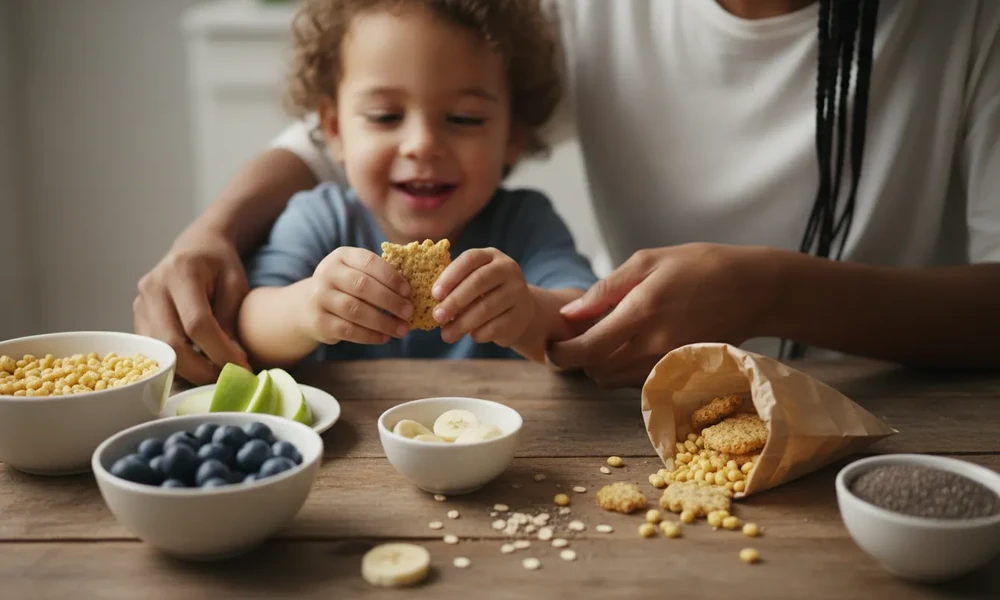
Bright packaging often promises wholesome goodness, yet the back panel tells the real story. Many parents grab organic toddler snacks assuming every certified packet is automatically free of sugar or fillers. Certification rules do allow certain processing aids, sweeteners plus thickeners within approved limits. Small children also have tiny stomachs, so each bite should count toward real nourishment. Learning a few label habits helps families pick better options within seconds at the shelf.
Order on the Label Reveals Proportions
Components appear in descending order by weight, so the first three matter most. When any sweetener sits near the top, that product likely carries plenty of sugar. Short labels with recognisable words usually signal less processing overall for young children.
Sweeteners Often Wear Many Different Names
Manufacturers can list several sugar sources separately so none appears first on the panel. Words ending in use, such as dextrose or maltose, usually point to added sugar. Juice concentrates count as added sugar even when the front says no refined sugar. Health experts advise keeping added sugar very low for children under two years.
Warning Signs Worth Checking Before Buying Packets
Some extras are harmless while others add little value for growing bodies. Look closely at these points whenever comparing two similar products on shelves.
- Vague terms such as natural flavour rarely explain the actual source.
- Sodium above 120 milligrams per hundred grams signals a fairly salty option.
- Several separate sweeteners listed together often add up to excess sugar.
- Modified starches mainly bulk up texture without contributing much nourishment.
- Puffed products sometimes contain added oils that raise overall fat content.
Comparing Two Packets Side by Side
Placing two options next to each other quickly highlights meaningful differences in quality. Shoppers comparing organic toddler snacks should check the per hundred grams column for fair results.
- Compare sugar per hundred grams rather than per individual serve.
- Check fibre content because higher figures usually mean more whole grains.
- Note allergen statements printed in bold beneath the component panel.
| Label Term | What It Usually Means | What to Do |
|---|---|---|
| Juice concentrate | Concentrated natural sugar | Treat it as added sugar |
| Natural flavour | Extract from an unspecified source | Contact the brand if unsure |
| Maltodextrin | Processed starch used as a thickener | Prefer products without it |
| Sea salt | Still a source of sodium | Check the total sodium figure |
| Evaporated cane juice | Refined sugar under another name | Count it as added sugar |
| Vegetable oil | Added fat for texture | Prefer shorter fat lists |
Certified labels confirm farming methods, yet they never guarantee low sugar levels. Checking every term carefully keeps young diets balanced throughout busy weeks.
Common Questions Parents Ask About Labels
· Does certified mean free of added sugar? No, certified products can still contain approved sweeteners in noticeable amounts.
· How much sodium suits children aged one to three? Many guidelines suggest staying below about one thousand milligrams each day.
· Are natural flavours safe for little ones? Generally, yes, though the vague wording conceals which sources were actually used.
· Should parents avoid every product containing salt? Not necessarily, since small amounts are fine within a balanced overall diet.
· What makes a short label better? Fewer components usually mean less processing plus easier checks for allergens.
· Do certified treats contain artificial colours? Most certification standards ban synthetic colours, though plant-based colourings remain allowed.
Choose with Confidence
Smart shopping for young eaters starts with turning the box around first. Check syrup names, salt totals, or vague flavour wording before deciding. Judge organic toddler snacks using figures per hundred grams for honest results. Products with brief, recognisable wording usually suit growing bodies best of all. Steady attention at the supermarket protects young diets far more than any marketing claim.

Comments are closed.